
Why 67% Prefer Cotton: Skin, Planet, and Travel Ready Benefits


Cotton earns its reputation as the top everyday fabric choice for one simple reason: it breathes, it’s gentle on skin, and it breaks down naturally instead of shedding plastic into waterways. The main tradeoff is performance in wet or cold conditions, where cotton holds moisture and loses insulating power. For warm-weather wear, sleepwear, and sensitive skin, the case for cotton is backed by consumer research and lab testing alike.
TL;DR:
Cotton’s biodegradability reduces microfiber pollution compared to synthetics, which can persist in environments for decades and shed microplastics during washing.
The comfort difference between 100% cotton and blends with polyester is significant, especially in hot, humid conditions, with consumers able to distinguish the difference at a 99.5% confidence level.
Cotton holds onto moisture and loses insulation when wet, making it unsuitable for cold or rainy activities, and it dries slowly, increasing the risk of musty smells and mold.
Washing cotton in cooler water and air-drying can prevent shrinkage and help maintain softness, while minimal processing or organic options reduce chemical exposure for sensitive skin.
For travel clothing, lightweight, adjustable 100% cotton sets provide versatility for day-to-evening wear, but avoid cotton for high-sweat or winter conditions when wet.
Table of Contents
What Are the Top Benefits of Cotton Clothing?
For readers who want the short version before the details, here’s what makes cotton worth choosing over synthetic alternatives for most everyday situations.
Breathability and cooling. Cotton fibers allow air to circulate and moisture to evaporate, which helps regulate body temperature in heat.
Gentle on sensitive skin. Its natural, hypoallergenic structure makes it a common recommendation for people prone to irritation or eczema.
Better moisture handling. Cotton absorbs sweat rather than trapping it against skin, which also means it holds onto odor less than many synthetics.
Lower environmental footprint at the end of life. Cotton biodegrades in wastewater, freshwater, and seawater, unlike plastic-based fibers.
Everyday versatility. The same qualities that make cotton good for T-shirts also make it a go-to for bedding, sleepwear, and travel clothing.
A 2025 global consumer survey backs up what most people already sense: 67% of shoppers rated cotton the most comfortable fabric and 66% called it the softest, with roughly 70% actively seeking out cotton or cotton blends when they shop.
What Are the Health and Skin Benefits of Cotton?
Cotton is a natural cellulose fiber, which means it lacks the petroleum-based structure that makes synthetics like polyester trap heat and friction against skin. That structural difference is why dermatologists frequently point to cotton as a safer default for people with reactive or easily irritated skin.
Lab testing supports this beyond anecdote. Controlled comfort trials found a statistically significant preference for 100% cotton garments over cotton/polyester blends in hot, humid conditions, with test subjects able to distinguish the comfort difference at a 99.5% confidence level. That’s not a marginal preference. It’s a measurable one.
For sleep, the advantage compounds. Cotton’s breathability helps regulate skin temperature through the night, and its tolerance for high-temperature washing makes it easier to keep sleepwear genuinely clean rather than just refreshed. Synthetic fabrics, by contrast, tend to trap heat and oils against the skin overnight, which can contribute to clogged pores and breakouts along the jawline and back. Cotton’s open fiber structure lets skin release that buildup instead of sitting in it.
How Does Cotton Compare to Synthetics for the Environment?
Cotton’s biodegradability is where it separates most clearly from synthetic fabrics. Research on textile breakdown found that cotton microfibers degrade substantially faster than polyester microfibers across wastewater, freshwater, and seawater environments. Polyester and other plastic-based fibers can persist for decades, shedding microplastics with every wash cycle.
That distinction matters for ocean health specifically. Industry investigations into textile-based microplastic pollution point to synthetic clothing as a significant contributor, since every laundry cycle releases fibers too small for most treatment systems to catch. Cotton doesn’t eliminate that concern, but its natural composition means what does shed breaks down instead of accumulating.
Cotton isn’t a perfect story, though. Conventional cotton farming uses meaningful amounts of agrochemicals, and that’s a real tradeoff against the fiber’s end-of-life advantage. Organic and GOTS-certified cotton address this by limiting chemical inputs during growing, which is worth checking for on a label if the environmental case is what’s drawing you to cotton in the first place.
When Should You Avoid Cotton?
Cotton’s biggest weakness is simple: it holds onto water. Once cotton fibers get wet, whether from rain, sweat, or a swim, they lose much of their insulating ability and can leave you colder than synthetic alternatives designed to wick moisture away. That’s a real safety consideration for hiking, cold-weather sports, or any activity where you’ll be sweating heavily in low temperatures.
Cotton also dries slowly compared with synthetic blends. Left damp in a gym bag or hamper, it can develop a musty smell or support mold growth faster than moisture-wicking fabrics. Store cotton items dry, and never pack a damp cotton garment into a sealed suitcase pocket.
Wrinkling is the other tradeoff. Cotton loses crispness and shape faster than synthetic blends, so for performance wear or garments that need to hold a structured silhouette all day, a cotton blend may serve you better.
How Do You Care for Cotton to Make It Last?
Cotton rewards a little attention with a lot of longevity. Wash most cotton garments in cool or warm water rather than hot, since heat is the primary driver of shrinkage. Check the care label. Some cotton is pre-shrunk and tolerates warmer washes, but when in doubt, cooler is safer.
New cotton often feels stiffer than it will after a few washes. A quick softening routine using a short cycle with a splash of white vinegar in the rinse can speed that process along without waiting for months of regular wear. Skip the dryer’s high-heat setting; tumble on low or air-dry to protect both softness and fit.
For stains, treat them while fresh and avoid letting a damp garment sit in a hamper for days, which invites both odor and mildew. Fold or hang cotton pieces fully dry, in a ventilated space, to keep them smelling clean between wears.
What Should You Look for When Buying Cotton Clothing?
Not all cotton performs the same, and a few label details separate a garment that softens beautifully over years from one that thins out after a season.
Staple length matters. Long-staple cotton produces smoother, more durable yarn that resists pilling, so it’s worth the modest price difference over short-staple versions.
Weave should match the garment’s job. Jersey knit suits T-shirts and everyday wear, percale suits sheets and lightweight summer pieces, and sateen gives dressier items a subtle sheen.
Read past “cotton blend.” A garment labeled 100% cotton behaves differently from one that’s 60% cotton and 40% polyester, even if both feel similar on the hanger.
Look for organic or GOTS certification if the environmental case for cotton matters to your decision, since it addresses the chemical-input tradeoff in conventional farming.
Check the care label for honesty, not just marketing language. A garment that says “easy care” but requires cold, gentle washing to avoid shrinkage isn’t actually low-maintenance.
For guidance on weight and weave specifically for hot climates, choosing the right cotton for warm weather breaks down which options keep you coolest.
The Adeirlina Perspective: Cotton Designed for Real Vacation Days
Adeirlina builds its matching sets around the same principle that makes cotton worth choosing in the first place: comfort that holds up across an entire day, not just a photo.
That adjustability solves a real packing problem. One set styled with a wrap or tied differently transitions from casual daywear to something dressier by evening, which means fewer pieces in a suitcase and more room for everything else. The adjustable strap design that lets a piece move from casual to elevated is exactly the kind of detail that turns a good travel fabric into a genuinely versatile outfit.
Cotton’s natural softening over time only makes a well-designed matching set better with wear, which is part of why the format has become a staple in warm-weather travel wardrobes.
Does Cotton Really Help With Allergies and Sensitive Skin?
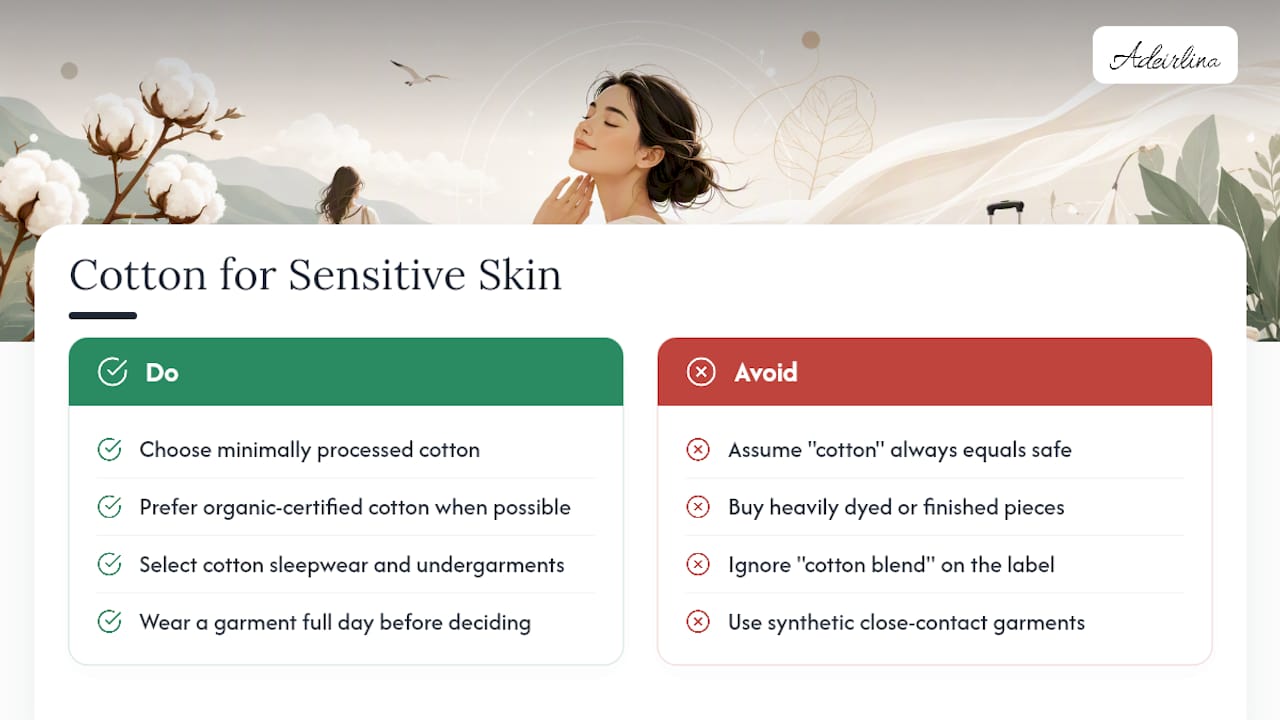
Cotton’s hypoallergenic reputation isn’t just marketing shorthand. Its natural fiber structure lacks the synthetic dyes, resins, and petroleum-derived compounds that can trigger contact dermatitis in people with reactive skin. That matters most for anyone dealing with eczema, psoriasis, or general skin sensitivity, where the wrong fabric can turn a manageable condition into a flare.
The mechanism is straightforward. Synthetic fibers tend to trap heat and moisture against skin, creating a warm, damp environment where friction and sweat can aggravate already-irritated areas. Cotton’s breathability keeps that friction and heat buildup lower, which is part of why dermatological guidance so often points sensitive-skin readers toward cotton sleepwear and undergarments specifically, since those are the items in longest, closest contact with skin.
It’s worth being precise about what “hypoallergenic” does and doesn’t mean here. Cotton itself rarely causes an allergic reaction, but that doesn’t mean every cotton garment is automatically safe for sensitive skin. Dyes, finishing treatments, and blended fibers can still introduce irritants even in a cotton-majority fabric. Reading past “cotton blend” on a label matters as much for skin health as it does for durability.
For anyone managing chronic skin conditions, the practical takeaway isn’t just “buy cotton.” It’s buying cotton with minimal processing, checking for organic certification when possible, and paying attention to how a specific garment feels against skin over a full day, not just at the moment of purchase.
How Does Cotton Prevent Irritation Compared to Other Fabrics?
Skin irritation from clothing usually comes down to three factors: friction, heat retention, and moisture trapping. Cotton performs better than most synthetics on all three, which is why it shows up so consistently in comfort research and dermatological recommendations alike.
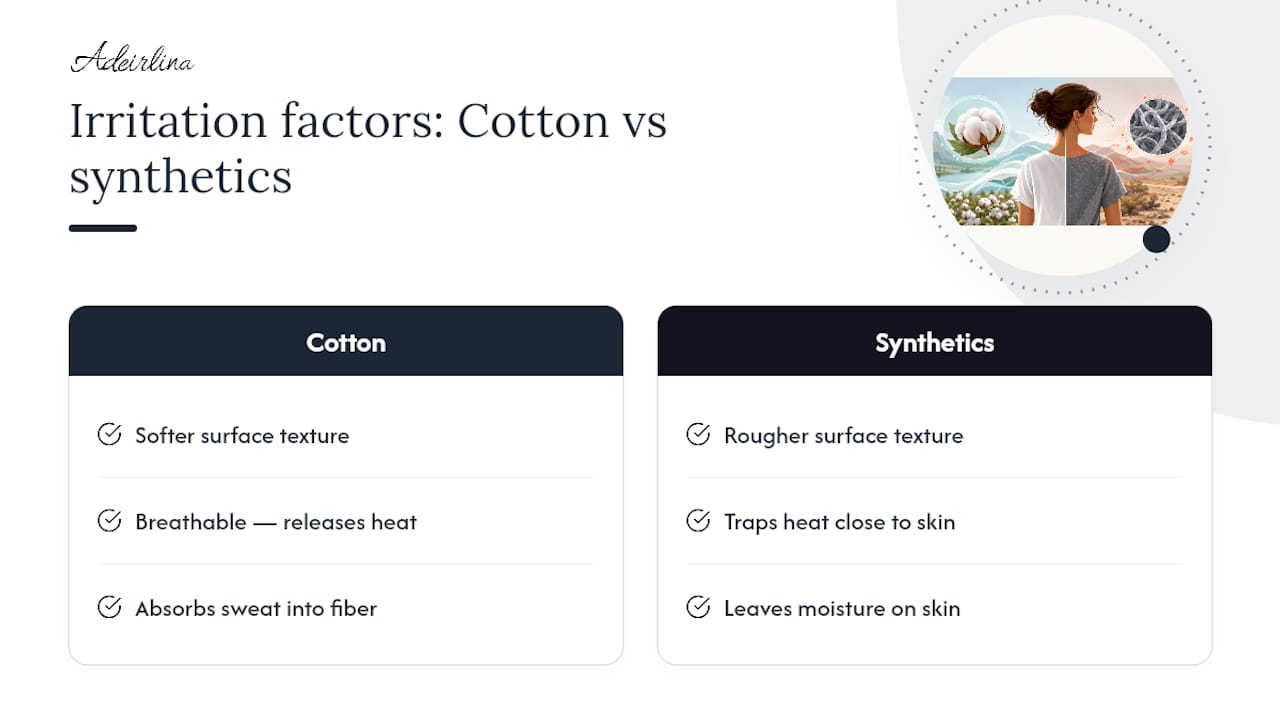
Friction is the most immediate factor. Cotton’s fiber structure creates a softer surface texture than synthetics like polyester or nylon, especially in areas where fabric rubs against skin repeatedly, such as underarms, inner thighs, and waistbands. Over the course of a day, that difference in texture adds up, particularly for anyone who sweats or moves frequently.
Heat retention is where cotton’s breathability does its real work. Synthetic fabrics trap body heat close to skin, and that trapped heat combined with sweat creates the exact conditions that lead to chafing, heat rash, and folliculitis. Cotton’s open weave lets that heat escape rather than accumulate, which is part of why choosing the right cotton weight for hot weather makes such a measurable difference in comfort during active or humid conditions.
Moisture is the third piece. Wool and some synthetics can feel scratchy against damp skin, while cotton absorbs sweat into the fiber itself rather than leaving it sitting on the skin’s surface. That absorbency is exactly what showed up in lab comfort trials favoring 100% cotton over blends under hot, humid test conditions. The combination of softer texture, better heat release, and moisture absorption is why cotton remains the safer default for anyone prone to irritation, rashes, or general skin sensitivity.
Why Cotton Still Wins, Even With Its One Real Weakness
The research is consistent enough that it’s not really up for debate: cotton wins on comfort, skin health, and end-of-life environmental impact. Where the conventional advice falls short is in treating cotton as universally superior, full stop, without being honest about the wet-and-cold exception. That caveat isn’t a footnote. It’s the single most important piece of practical guidance in this whole topic, and skipping it is how people end up cold and damp on a hike wearing the wrong shirt.
What gets underrated is how much the “hypoallergenic” label oversimplifies things. Cotton itself is gentle, but dyes, finishes, and blended fibers can undo that advantage, so the smart move is reading past the fabric content line on a label, not just trusting the word “cotton” printed on a tag.
If there’s one thing readers should prioritize first, it’s matching the fabric to the actual use case: cotton for everyday wear, sleep, and warm climates; something else entirely for cold, wet, high-output activity. Adeirlina’s approach to travel-ready cotton pieces works precisely because it’s built around that reality; lightweight and breathable for daytime heat, adjustable enough to dress up by evening, without pretending cotton needs to do a job it was never suited for.
— Naomi
Meet the Matching Set Built for Every Part of Your Trip
A single Adeirlina matching set does something most vacation wardrobes can’t: it works for the entire day without a wardrobe change.
[

The set is popular on social media and is worn by many as a versatile wardrobe staple for travel. It comes in a wide range of colors, so there’s a shade suited to practically any destination, mood, or occasion, from a sun-bleached coastal town to a candlelit evening in the city. Explore the Seaside Matching Set or browse the full Adeirlina collection to find the color and fit that matches your next trip.
Sources
FAQ
Is Cotton Better Than Polyester for Sensitive Skin?
Yes. Cotton’s natural fiber structure lacks the synthetic compounds and heat-trapping properties that commonly aggravate eczema, contact dermatitis, and general skin sensitivity.
Does Cotton Shrink Every Time You Wash It?
Not if you wash it correctly. Cotton shrinks mainly from hot water and high heat drying, so washing in cool or warm water and air-drying or tumble-drying on low largely prevents it.
Is Cotton Warm Enough for Cold Weather?
Cotton performs poorly once wet in cold conditions, since it loses insulating ability and dries slowly, making it a poor choice for cold, damp, or high-sweat activities like winter hiking.
Why Did Adeirlina’s Matching Set Go Viral?
Its lightweight, adjustable 100% cotton design lets one outfit move from daytime sightseeing to evening dinner without a wardrobe change, a versatility that resonated with travelers and influencers alike, and it’s available in a wide range of colors on Adeirlina’s site.
Is 100% Cotton Always Better Than a Cotton Blend?
Not always.
Recommended