
Cotton Outfits for Hot Weather: What Actually Keeps You Cool
- Phuong Nguyen

- 3 days ago
- 7 min read

Lightweight, loosely woven 100% cotton is the best choice for hot, humid weather. Gauze, voile, seersucker, chambray, and cotton jersey all outperform heavier weaves because they let air move against your skin instead of trapping it there.
Fastest cooling: cotton gauze or voile, for peak heat and beach towns.
Most polished for travel: chambray or a matching set, for day-to-night versatility.
Everyday breathable basic: tropic-weight or cotton jersey tees.
Cotton absorbs sweat well, which is exactly why it feels good in the heat. But once it’s fully saturated, it holds that moisture and dries slowly, so it’s not the right choice for every hot-weather scenario.
Key Takeaways
Cotton outfits work best in hot weather when the weave is loose and the weight is light, since airflow and fast drying matter more than fiber content alone.
Point | Details |
Weave beats fiber name | Choose gauze, voile, seersucker, chambray, or lawn over generic “cotton” labels. |
Fit drives airflow | Loose drape, vents, and floaty sleeves cool you more than fabric alone. |
Know cotton’s limit | Once saturated, cotton holds moisture, so heavy sweating calls for merino, linen, or wicking blends. |
Shop with a checklist | Confirm weave, GSM, fiber content, and adjustability before buying. |
Adeirlina’s matching sets | Adjustable 100% cotton sets from Adeirlina move from market mornings to sunset dinners in one packable piece. |
Table of Contents
Which Cotton Weaves Keep You Coolest?
Weave and weight matter more than the word “cotton” printed on the tag. An open, loose weave lets air pass through the fabric constantly, while a lower gram weight (GSM) means the fabric holds less moisture and dries faster once you do sweat. A heavy 200 GSM cotton twill and a featherlight 90 GSM voile are technically the same fiber, but they behave like different materials entirely in July heat.
Cotton gauze is about as airy as cotton gets. It’s loosely woven, almost see-through in places, and performs especially well in extreme heat and relaxed beach settings. Voile is a close cousin: crisp, sheer, and perfect for flowy dresses. Seersucker has a puckered texture that holds it slightly away from your skin, creating natural airflow. Chambray looks like denim but wears nothing like it. It’s soft, lightweight, and one of the better warm-weather cotton varieties for polished travel outfits. Cotton lawn is fine, smooth, and drapes beautifully over the body without clinging. Cotton jersey is the knit exception here. It’s stretchy and comfortable for tees and easy dresses, though it runs heavier and holds more moisture than the woven options above.
When you’re shopping, watch the label language. Terms like “gauze,” “voile,” “tropic-weight,” and listed GSM numbers signal genuine warm-weather engineering. If a brand mentions GOTS certification, that’s a solid marker of organic, responsibly grown cotton.
Cotton is permeable and hydrophilic. It absorbs sweat and allows airflow, which is why it feels cooler than synthetic wovens in dry heat, but that same absorbency means it stays damp longer once it’s soaked through.
Pro Tip: Hold fabric up to a window before buying online. If light passes through easily, the weave is loose enough for real hot-weather wear.
What Fit and Cut Actually Help You Stay Cool?
Fabric only does half the work. Fit determines whether air can actually circulate against your skin, and that’s the piece most shoppers overlook.
Loose drape beats tight fit every time in humidity. Room through the chest and torso, A-line skirts that skim rather than hug, wide-leg pants, and floaty sleeves all create tiny pockets of moving air. A bias-cut skirt in cotton lawn will feel cooler than a fitted pencil skirt in the exact same fabric, simply because of how it hangs off the body.
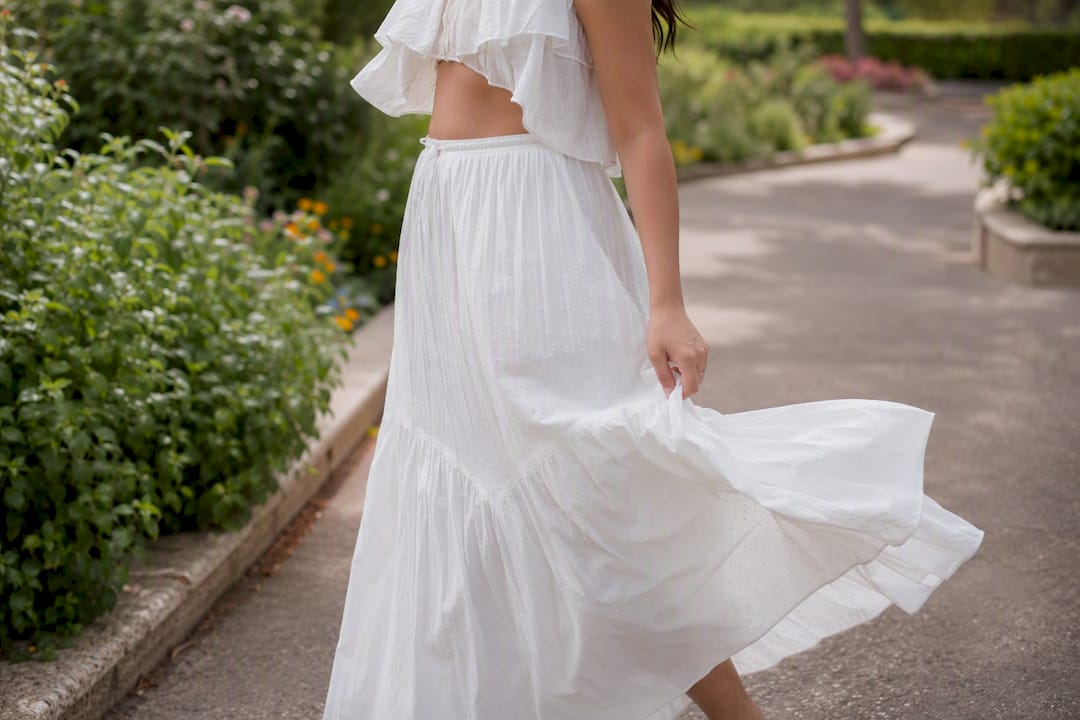
For actual garments, an easy shift or wrap dress in cotton gauze or voile handles peak heat with almost no effort. A matching set (breezy top plus wide-leg pants or a midi skirt) gives you the polish of a full outfit while layering summer pieces as light as a single layer. A simple cotton top with shorts or a skirt covers casual daytime activity in sticky conditions.
Prioritize construction details when you’re evaluating a piece: side vents, button-front closures that you can leave partly open, raglan or dropped sleeves that skip tight armholes, and minimal or no lining. Every one of those choices is a small engineering decision that either helps or hurts airflow.
Pro Tip: Pinch the fabric at the shoulder seam. If it springs back easily and doesn’t cling to your fingers, it will move with you instead of sticking to sweat.
How Do You Shop for Cotton That Actually Performs?
Use this sequence before you check out, whether you’re standing in a store or scrolling a product page at midnight.
Check the weave name. Look for gauze, voile, seersucker, chambray, or lawn specifically, not just “cotton.”
Read the weight description. A listed GSM under roughly 130 is genuinely lightweight; anything unlisted deserves a closer look at the photos.
Confirm the fiber content. Aim for 100% cotton, or a blend with a clear purpose (a touch of stretch for fit, not bulk for warmth).
Look for adjustability. Drawstrings, elastic waists, and adjustable straps let one piece fit multiple body shapes and multiple moments in a day.
Choose lighter colors when possible. Pale and neutral tones reflect more heat than deep, saturated shades.
Check the return policy before a trip. Drape is hard to judge from a photo, and you want room to size-swap before you pack.
Skip anything described as “heavy cotton,” tightly woven like denim, or a thick jersey knit. Study product photos closely: if the fabric looks stiff and holds its shape away from the model’s body, it’s built for structure, not breathability.
When Should You Skip Cotton Entirely?
Cotton is comfortable in the heat, but it’s not the right fabric for every hot-weather situation. Because it holds moisture once saturated, it becomes a liability during heavy sweating, extended outdoor activity, or humid climates with no chance to dry out between wears.
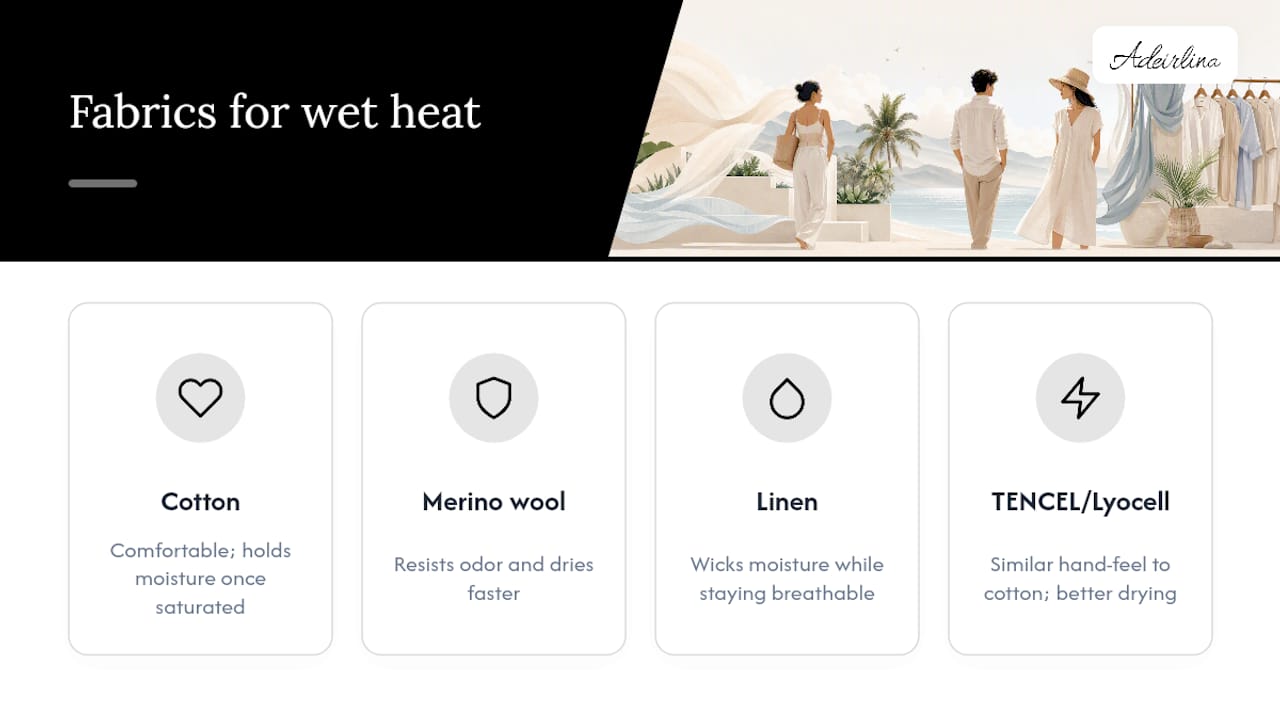
For hikes, workouts, or all-day outdoor events in wet heat, moisture-wicking alternatives outperform cotton: merino wool resists odor and dries faster, linen wicks moisture while staying breathable, and TENCEL or Lyocell blends offer a similar hand-feel to cotton with better drying performance. Cotton wins on softness and comfort against skin. Merino wins on odor control over multiple wears. Synthetic wicking blends win on pure drying speed. Choose based on how long you’ll be sweating before you get a chance to change.
Why a Cotton Matching Set Is the Smartest Vacation Packing Choice
A single adjustable cotton matching set can carry you through an entire vacation day without a single outfit change, and that’s exactly the problem it’s designed to solve.
Morning market: breathable cotton stays cool while you walk, and the relaxed fit photographs beautifully in natural light.
Midday sightseeing: adjustable straps and a stretch waist mean the fit holds up whether you’re standing in a museum or sitting through lunch.
Afternoon nap: the same soft cotton that looks polished outdoors doubles as genuinely comfortable rest wear.
Sunset dinner: swap sandals for heels and the exact same matching set becomes evening-ready.
Dancing at night: the give in the fabric and the adjustable fit move with you instead of restricting you.
Adeirlina’s editorial guidance points to this exact logic: lightweight, breathable 100% cotton paired with adjustable details that let one piece serve multiple parts of a day. Pack one set, swap a sandal for a heel or add a light cover-up, and you’ve built five outfits out of one hanger.
Pro Tip: Roll, don’t fold, cotton matching sets for travel. It cuts wrinkles significantly and frees up real space in a carry-on.
How Naomi Builds a Cotton Outfit for Heat
Comfort comes first, always. If a piece doesn’t breathe, no amount of styling saves it. Versatility comes second: can it work at breakfast and at dinner? Photogenic drape comes third.
What I check first when evaluating a travel piece:
Does the fabric move when I walk, or does it cling?
Can the fit adjust across a day of temperature and activity changes?
Does it still look intentional in photos, not just comfortable?
The best hot-weather outfit is the one where comfort and style stop competing with each other.
The Matching Set That Solves Vacation Packing for Good
There’s a reason one particular cotton matching set went viral on Instagram and kept spreading from there: it looks effortless in every setting, and it actually is.
[
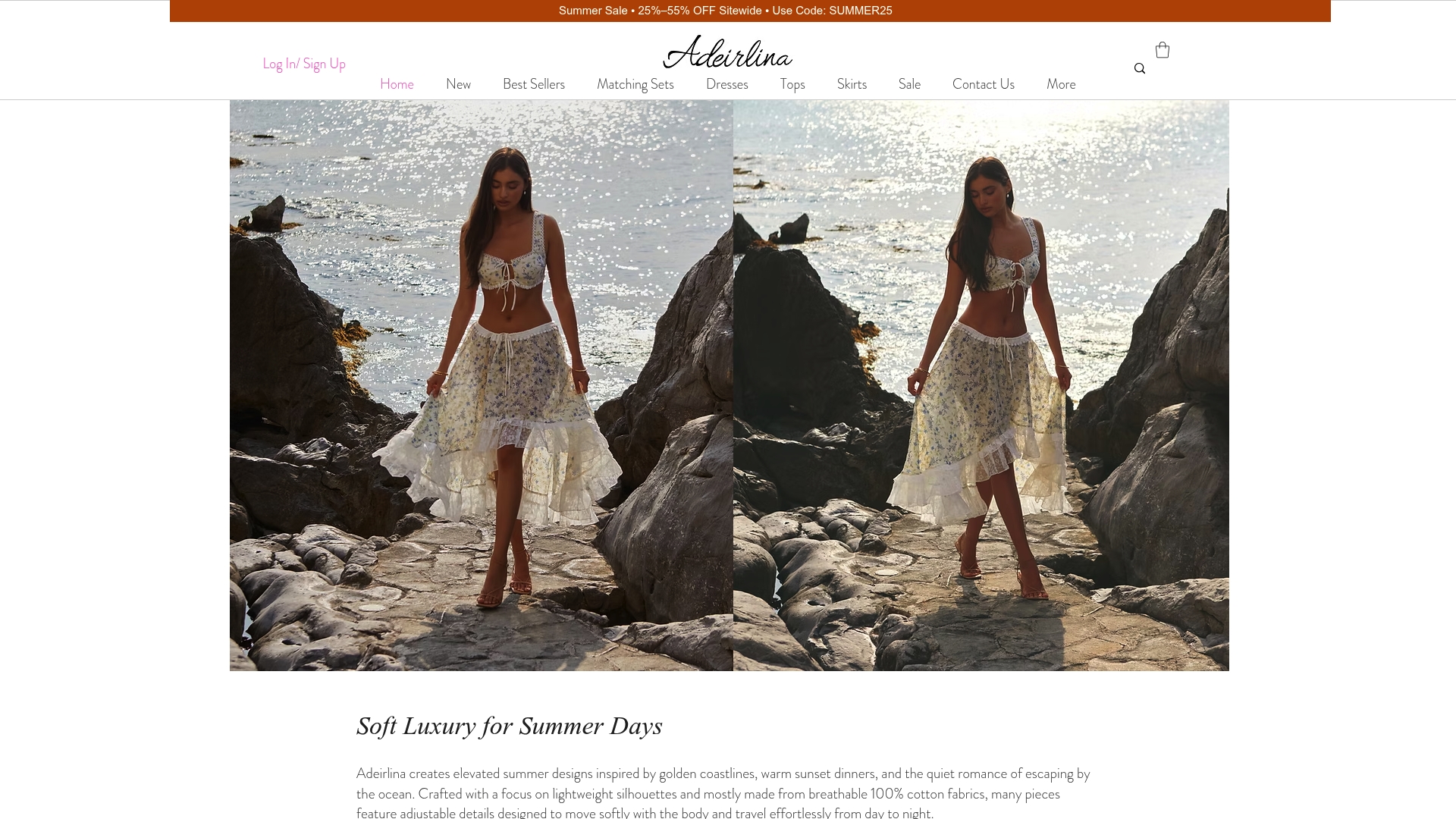
Adeirlina built its Laced in Light Midi Skirt sets around a simple idea. Customers, influencers, and celebrities around the world have worn these sets from beach towns to weddings, and the appeal holds up in every setting because the fabric and the fit do the actual work. A morning market stroll, a lazy afternoon nap, a candlelit dinner, and a night of dancing all ask something different of an outfit, and this one adjusts to each moment instead of fighting it.
It comes in a wide range of colors, so there’s a shade for every destination, mood, and occasion, from soft neutrals for daytime to richer tones for evening. Packing light no longer means packing boring. Browse the current colorways and sizing to find the one that matches your next trip.
Frequently Asked Questions
Is cotton good for hot, humid weather? Yes. Cotton absorbs sweat and allows airflow, which makes it comfortable in heat, though it dries slower than wicking fabrics once fully saturated.
What’s the coolest cotton weave to wear? Cotton gauze and voile are the loosest, airiest weaves and tend to feel coolest against skin in peak heat.
Can I wear cotton for a full day of humid outdoor activity? For casual sightseeing or travel days, yes. For heavy sweating or extended exercise, a wicking blend or merino wool will manage moisture better.
Are matching sets practical for hot-weather travel? An adjustable cotton matching set is one of the most efficient travel pieces available, since a single set can move from daytime activity to an evening event with a simple accessory swap.
What colors keep cotton outfits cooler in the sun? Lighter, paler shades reflect more heat than deep or saturated colors, though loose fit and weave still matter more than color alone.
Sources
Recommended